greenermakes
Lenz Socks – Knitting pattern
Lenz Socks – Knitting pattern
Couldn't load pickup availability
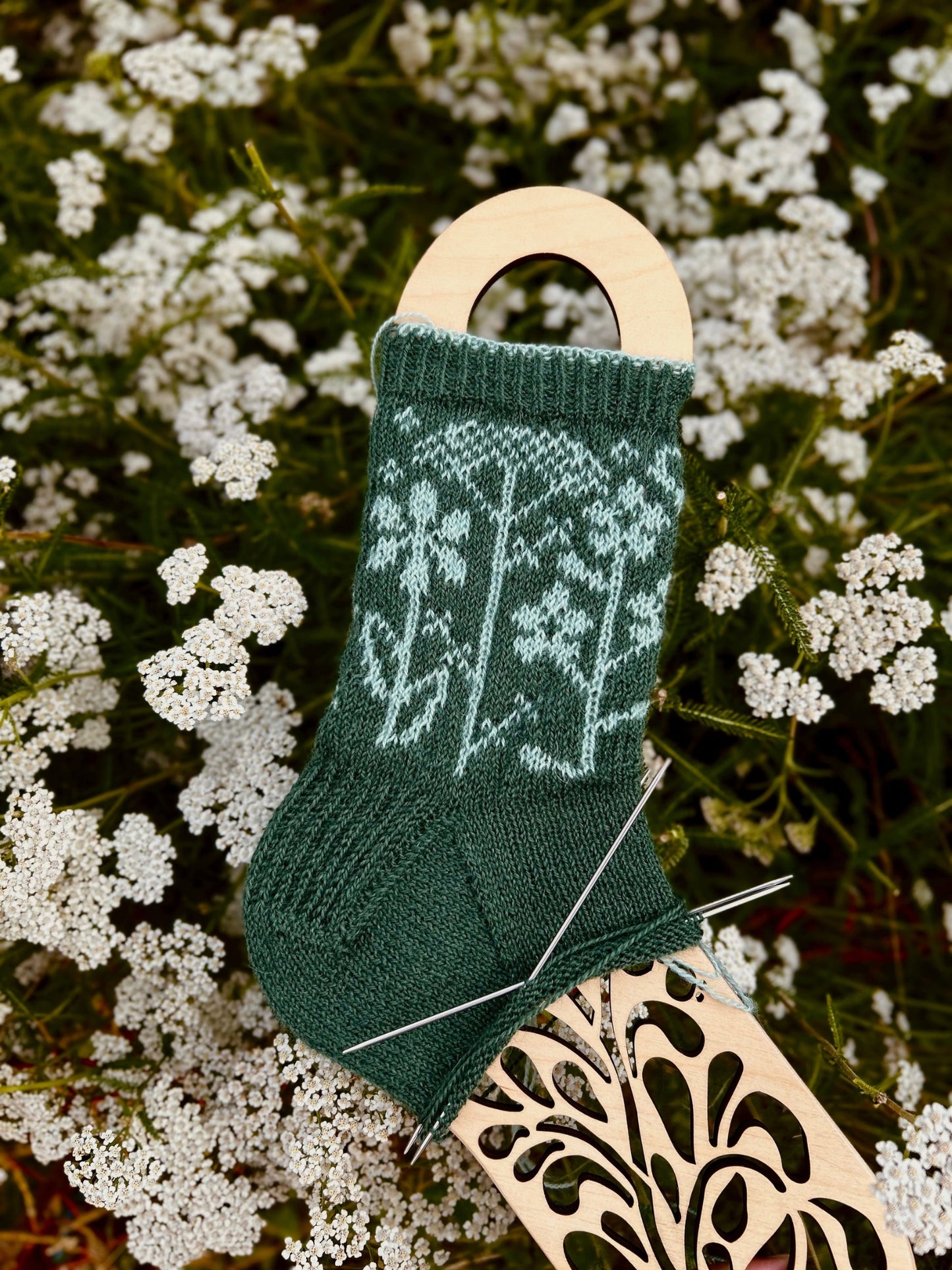
The Midsommar Socks are the sister pattern to my Lenz Socks: while the latter celebrate the first blossoms of spring, the Midsommar Socks shine a spotlight on all the summer flowers. They are named after the Swedish midsommar festivities, which honor the longest day of the year and the arrival of summer.
The socks are knit from the cuff down, starting with half-twisted rib. After that, a colourwork section lets a variety of wildflowers bloom on the leg of the sock, with two butterflies fluttering among them. And the special "knit by numbers" charts spare you the effort of counting stitches! The heel and foot are knitted in one colour, except for a delicate colourwork detail on the toe.
All the plants on the socks are inspired by actual wildflowers native to Central Europe. At the end of the pattern, I am showing you which species are depicted. I think it is worth knowing the names of all the beauties that delight us with their blossoms in summer – and not just us, but also all the wild bee and butterflies that need our support.
Sizes
3 sizes, corresponding to shoe size EU 36–39 (40–41) 42–44
Recommended yarn:
Fingering weight sock yarn in one main colour and one contrast colour, e.g. Erika Knight Moorland Mohair
Yarn estimates:
- Main colour: approx. 260 (290) 320 m / 280 (320) 350 yds
- Contrast colour: approx. 70 (70) 75 m / 75 (75) 85 yds
Needles and notions needed:
- DPNs (5 needles per set) OR circular needles with minimum length of 80 cm (32”) (if you prefer to knit socks with the Magic Loop method), sizes 2 mm (US 0) and 2.5 mm (US 1.5)
- stitch markers, tapestry needle
Gauge:
- Stockinette: 34 stitches x 46 rows = 10 x 10 cm / 4 x 4” on 2 mm (US 0) needles in the round, blocked
- Colourwork: 34 stitches x 36 rows = 10 x 10 cm / 4 x 4” on 2.5 mm (US 1.5) needles in the round, blocked
Level of difficulty:
advanced beginner to intermediate (not suitable for a first colourwork knit, but definitely easier than it looks)
Techniques (explanation/tutorial included):
- stranded colourwork
- increases
- decreases
- duplicate stitch embroidery (optional)
Share